Her Trydan Dŵr Micro
Cyflwyniad
Mae cymuned fach ger Aberystwyth yn dymuno gosod tyrbin trydan dŵr micro yn yr afon leol. Eich tasg chi yw canfod a all yr afon gynhyrchu digon o drydan drwy gydol o flwyddyn ac a yw'n cyd-fynd ag anghenion ynni tymhorol y pentref.
Byddwn yn darparu'r hafaliadau peirianneg angenrheidiol, data llif yr afon a gofynion trydan cartrefi i'ch helpu i wneud penderfyniad.
Cliciwch y botwm 'nesaf' i ddechrau arni.
Pŵer yr afon
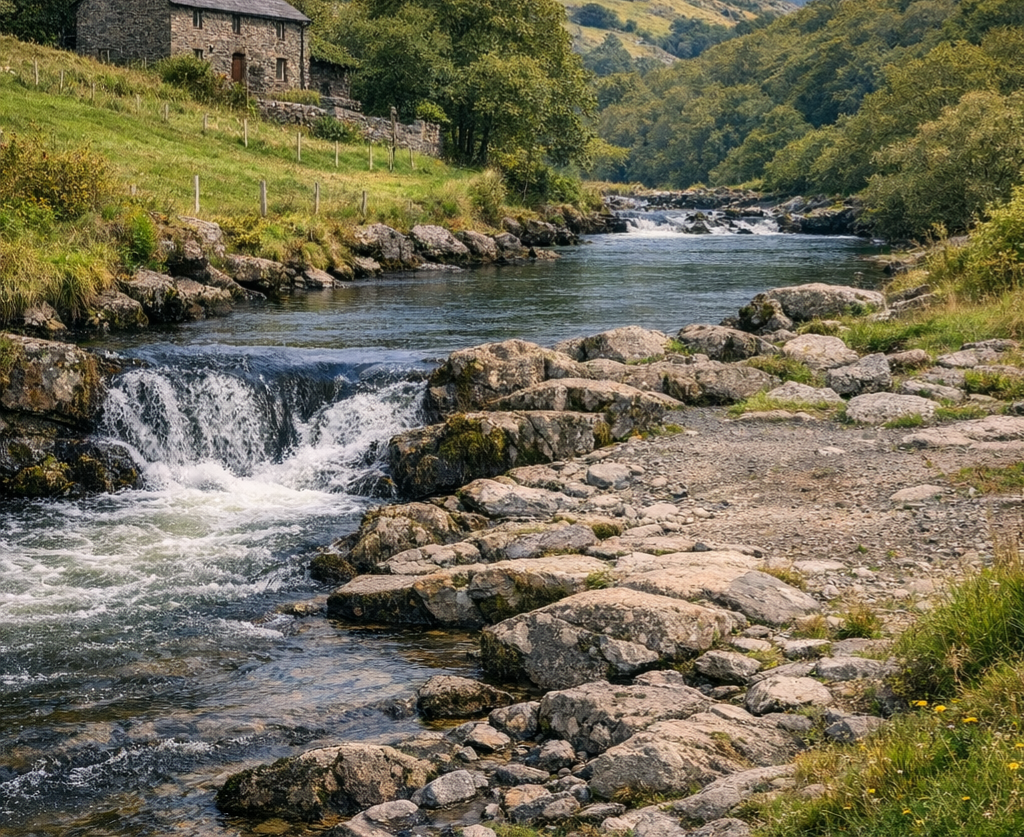
Mae gan y rhan o'r afon a ddewiswyd ar gyfer y gosodiad hwn gwymp uchder (neu ben) yn mesur 3.2 metr.
Byddai'r tyrbin a ddewiswyd yn rhedeg gyda gwerth effeithlonrwydd o 0.6 - sy'n golygu am bob joule o ynni potensial sy'n dod i mewn i'r system, caiff 0.6 joule o drydan ei gynhyrchu.
Mae rhai cysonion sydd angen i ni eu cadw mewn cof hefyd:
Dwysedd dŵr = 1000kg/m3
Disgyrchiant = 9.8m/s2
Hafaliad pŵer trydan dŵr
Dyma'r hafaliad y mae peirianwyr yn ei ddefnyddio i gyfrifo cynhyrchu pŵer o dyrbin trydan dŵr:
P = ρghQη
Gall hafaliadau deimlo'n frawychus weithiau, yn enwedig os ydyn nhw'n cynnwys llythrennau o wyddorau eraill (megis rho (ρ) ac eta (η) Groeg yn yr achos hwn).
Fodd bynnag, does dim symbolau mathemategol 'ynfyd' yn yr hafaliad hwn, dim ond pum newidyn a gynrychiolir gan wahanol lythrennau/symbolau a gaiff eu lluosi gyda'i gilydd i roi cyfanswm y pŵer (P) - a fesurir mewn watiau (jouleau fesul eiliad) - a gynhyrchir.
Gadewch i ni edrych ar beth sydd angen cymryd lle pob llythyren/symbol:
ρ = dwysedd dŵr (kg/m3)
g = disgyrchiant (m/s2)
h = uchder y cwymp (m)
Q = cyfradd llif (m3/s)
η = cyfradd effeithlonrwydd y tyrbin
Rydyn ni eisoes wedi darparu'r gwerthoedd ar gyfer popeth ar wahân i gyfradd llif yn y manylion uchod. Trafodir y gwerth coll, Q, yn yr adran nesaf gan fod cyfradd llif afon yn dymhorol ac felly'n amrywio drwy gydol y flwyddyn.
Data a gasglwyd
Mae ymchwil a gynhaliwyd ar yr afon yn darparu'r cyfartaleddau cyfradd llif hyn ar gyfer pob tymor:
| Tymor | Cyfradd llif (m³/s) | Nodiadau |
|---|---|---|
| Gaeaf | 1.8 | Glawiad trwm, llif cryf |
| Gwanwyn | 1.2 | Llif cymedrol |
| Haf | 0.6 | Llif isel, perygl o sychder |
| Hydref | 1.4 | Glawiad cynyddol |
Gan ddefnyddio'r ffigurau cyfradd llif hyn dylech nawr allu cwblhau'r hafaliad cynhyrchu pŵer ar gyfer pob tymor.
Yr hafaliad yw P = ρghQη
Mae hyn yn golygu yn y gaeaf:
P = 1000 x 9.8 x 3.2 x 1.8 x 0.6
felly, P = 33,868.8 Wat neu 33.87kW (i 2 bwynt degol)
Ar gyfer y tymhorau eraill, ailadroddwch y broses uchod gan newid dim ond gwerth Q (1.8 yn yr uchod) am y gyfradd llif ar gyfer y tymor hwnnw fel y'i nodir yn y tabl uchod.
Nawr mae gennym ni syniad faint o ynni y gellid ei gynhyrchu gan y gwaith trydan dŵr micro - ond faint o bŵer sydd ei angen ar y pentref?
Mae arolygon o'r pentref yn dangos defnydd ynni tymhorol fesul aelwyd ar gyfartaledd. Mae'r canlyniadau i'w gweld yn y tabl canlynol.
| Tymor | Cyfartaledd fesul Aelwyd (kW) | Nodiadau |
|---|---|---|
| Gaeaf | 1.3 | Y galw mwyaf: gwresogi, golau, gweithgaredd dan do |
| Gwanwyn | 1.0 | Tymor trosiannol, defnydd cymedrol |
| Haf | 0.7 | Y galw isaf: dyddiau hir o olau dydd, ychydig o wresogi |
| Hydref | 1.1 | Nosweithiau'n byrhau, gwresogi'n dechrau eto |
Mae 20 o aelwydydd yn y gymuned.
Casgliad
Bellach mae gennych chi'r holl wybodaeth ynghylch cynhyrchu ynni tymhorol o'r gwaith trydan dŵr arfaethedig, ac anghenion ynni'r gymuned fach. Gyda hynny, ceisiwch ateb y cwestiynau canlynol:
A all y tyrbin ddiwallu anghenion pŵer y gymuned drwy gydol y flwyddyn?
Os na all, a fyddai storfa batri yn cynnig ateb? Hynny yw, a oes digon o bŵer yn cael ei gynhyrchu drwy'r flwyddyn?
Allwch chi feddwl am ddewis 'gwyrdd' arall ar gyfer unrhyw brinder tymhorol?