Peintio Gyda Rhifau
Mae gan y Tîm Allgymorth broblem.
Maent wedi cael tŷ pâr i'w droi'n "Hwb Galw Heibio STEM" newydd sbon, ond mae'r tu allan yn edrych... wel... heb ei baentio ers yr 1980au. Cyn yr agoriad mawreddog, mae angen cot newydd o baent ar yr holl le.
Dim ond un anhawster sydd: nid yw'r tŷ yn un bocs syml. Mae gan y blaen ddau dalcen trionglog, mae gan y cefn ystafell wydr mewn siâp fel hanner octagon, a phenderfynodd rhywun yn y 1990au fod to hanner cromen yn syniad da. Dim ond tair wal y gellir eu paentio - mae'r bedwaredd wal yn sownd yn nhŷ'r cymydog.
Eich tasg yw gweithio allan yn union faint o arwynebedd wal sydd angen ei baentio, er mwyn i'r tîm allu archebu'r swm cywir o baent (ac osgoi achos arall o "redeg allan hanner ffordd i fyny'r wal").
Cliciwch ar y botwm 'nesaf' isod i weld cynrychiolaeth fras o'r adeilad y mae angen ei beintio.
Dimensiynau Adeiladu
Ein tasg gyntaf yw cyfrifo arwynebedd cyffredinol tu blaen, ochr a chefn yr adeilad.
Nid yw unrhyw un o'r delweddau wedi eu creu yn ôl graddfa.
Dewiswch wal i ddechrau arni:
Y Blaen:
Yn wynebu'r stryd mae adeilad gyda dau dalcen siâp triongl isosgeles cyfartal eu maint, drws a thair ffenestr o wahanol gynllun.
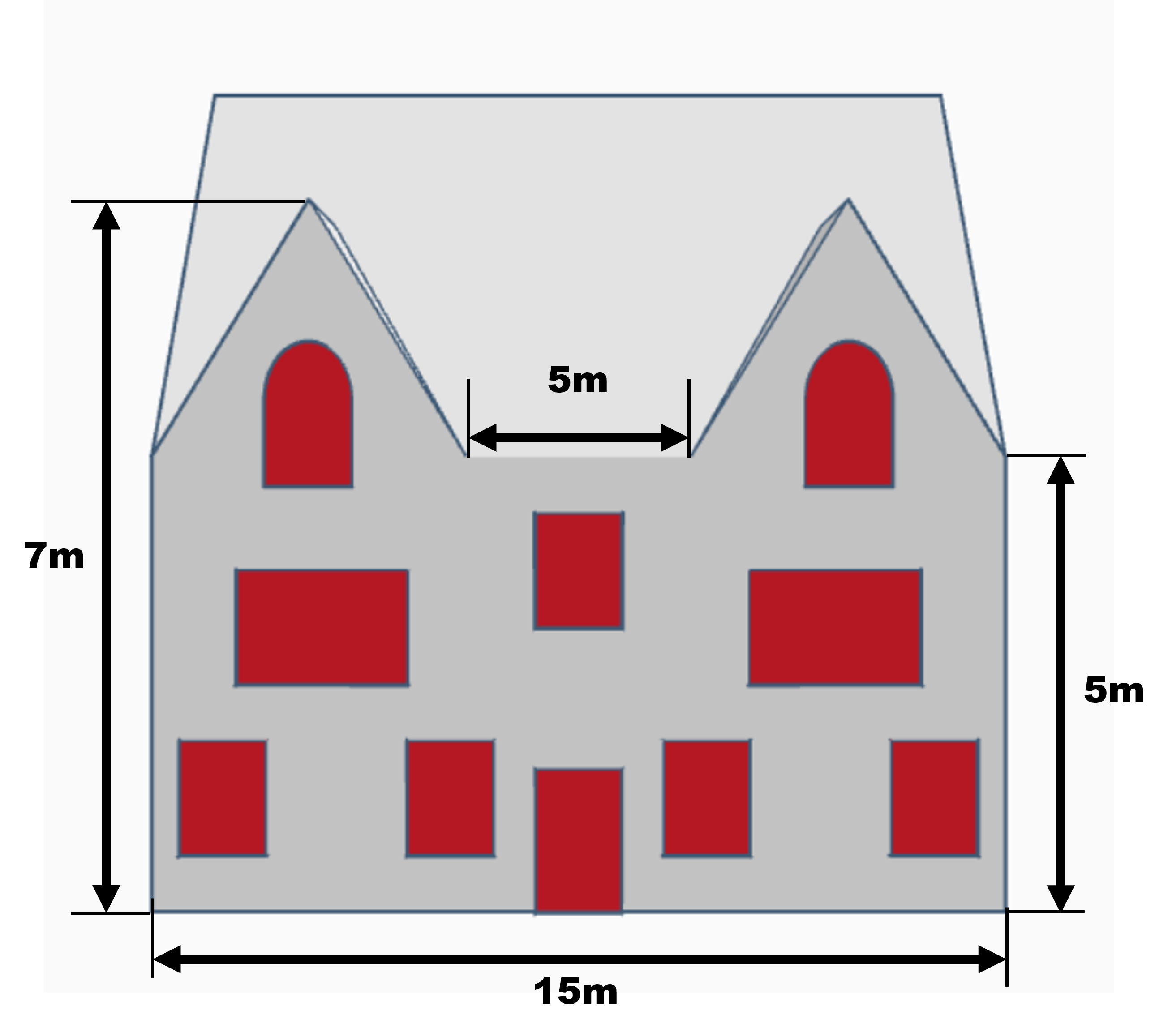
Gellir cyfrifo arwynebedd cyffredinol y wal (gan gynnwys yr holl nodweddion ychwanegol) trwy ddarganfod arwynebedd y blaen hirsgwar ac ychwanegu arwynebedd dau driongl isosgeles y talcennau.
Yr Ochr:
Mae yna stryd fach sy'n mynd heibio i'r rhan hon o'r adeilad. Nid oes unrhyw ddrysau na ffenestri ynddi. Yn hytrach, mae cerfiad siâp cylch mawr boglynnog o logo'r Brifysgol. Gellir gweld hefyd bod y bondo (neu'r llinell doeau) ar uchder gwahanol ar flaen a chefn y tŷ.
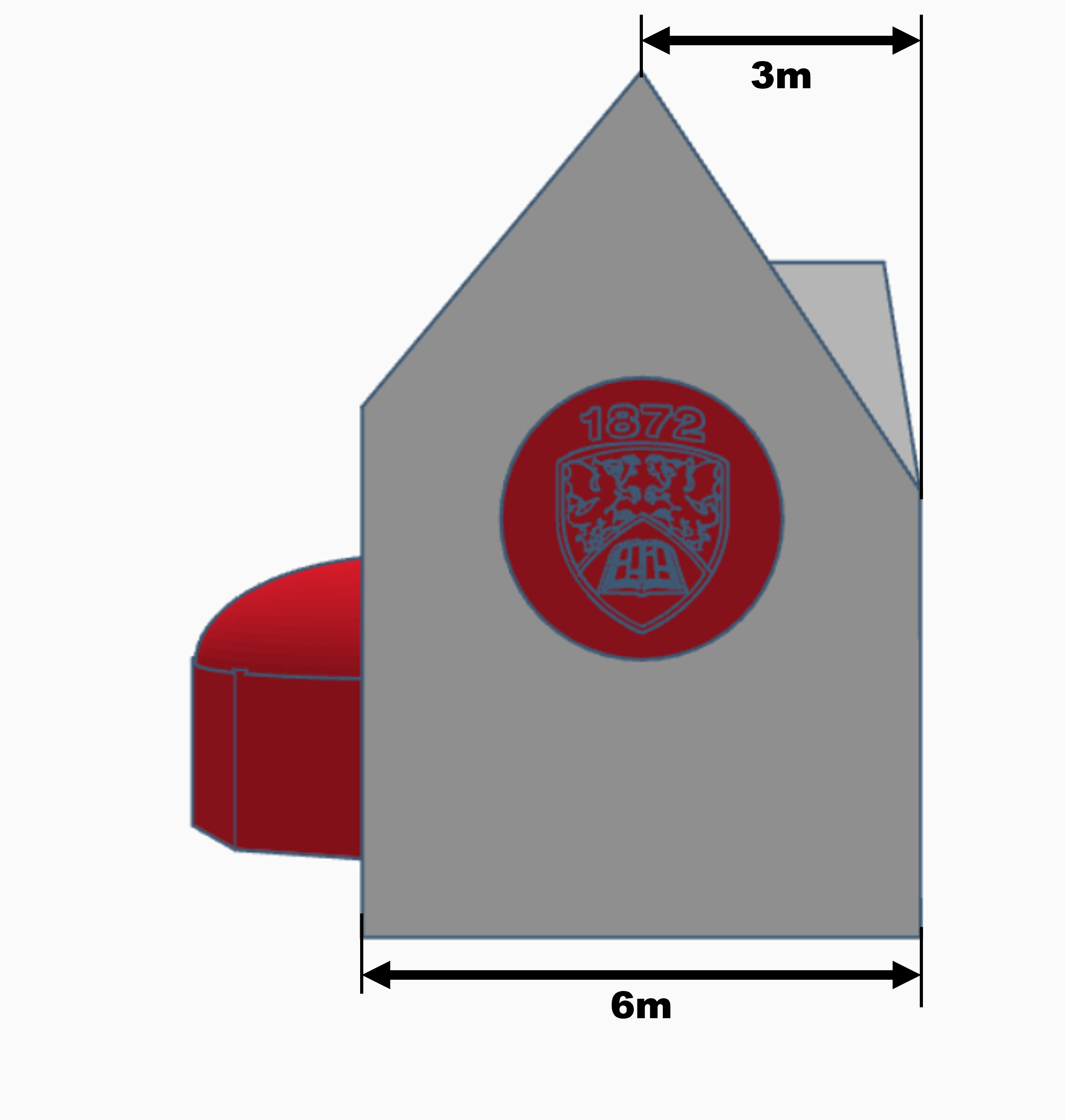
Mae ychydig o ddulliau y gallech eu defnyddio i rannu'r rhan hon yn siapiau symlach er mwyn cyfrifo arwynebedd cyffredinol y wal (gan gynnwys y cerfiad). Bydd yn rhaid i chi gyfeirio at yr ochrau eraill i gael yr holl ddimensiynau angenrheidiol.
Y Cefn:
Mae'r wal hon yn hirsgwar ac mae'n cynnwys ystafell wydr fawr gyda tho crwm.
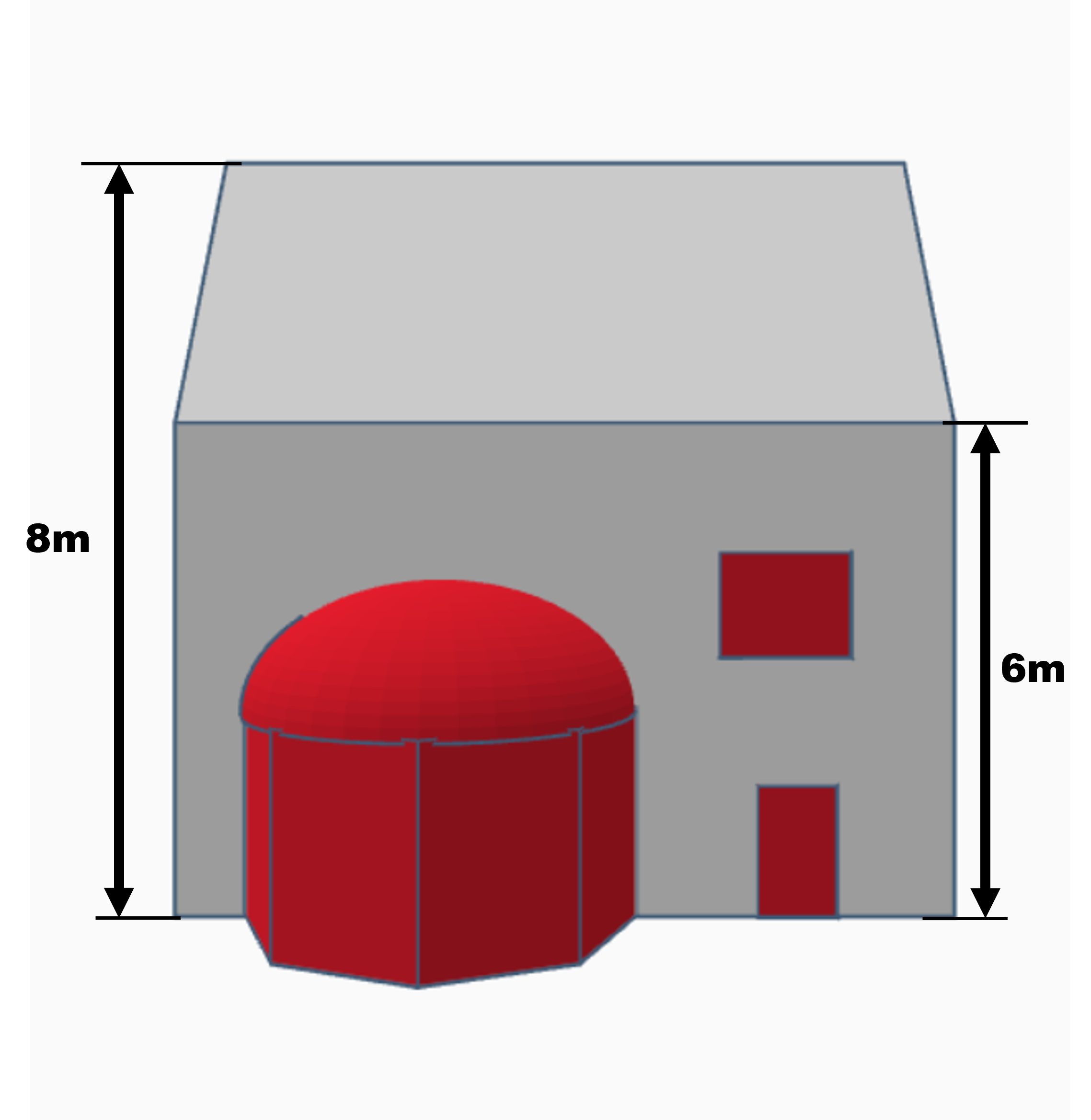
Ar gyfer arwynebedd lawn y waliau, gan anwybyddu'r holl nodweddion, bydd angen i chi gyfrifo arwynebedd y petryal gan ddefnyddio'r dimensiynau a ddarperir (gall rhai fod ar ddiagramau'r ochrau eraill).
Lleihau Gwastraff
Gallem arbed rhywfaint o amser i ni ein hunain a phrynu digon o baent i roi dwy got i'r arwynebedd cyffredinol.
Fodd bynnag, mae'r gyllideb yn dynn. Po fwyaf rydym ni'n ei wario ar y paent, y lleiaf o arian sydd ar ôl ar gyfer y gweithgareddau y byddwn yn eu cynnwys y tu mewn i'r adeilad.
Dimensiynau'r Nodweddion
Isod mae manylion pob un o'r nodweddion ar y waliau nad ydynt yn cael eu paentio.
Mae'r 5 ffenestr lai ar y wal flaen yn mesur 1m x 1.5m yr un.
Mae'r ddwy ffenestr flaen fwyaf yn mesur 3m x 1.5m.
Mae'r ffenestri bwaog (un ar bob talcen) yr un dimensiynau â'r ffenestri llai ar y tu blaen ond gyda hanner cylch ar eu pennau.
Mae'r ddau ddrws yn yr adeilad yn 0.9m x 2.1m.
Mae diamedr o 1.6m i logo cylch y Brifysgol ar y wal ochr.
Mae'r ffenestr gefn yn 1.5m x 1.5m.
Mae'r ystafell wydr yn cynnwys hanner octagon rheolaidd lle mae hyd bob ochr yn 1.2m. Mae paneli'r ystafell wydr hefyd yn 2.6m o uchder.
Mae gan y gromen ar ben yr ystafell wydr yr un diamedr â lled yr ystafell wydr.
I gael help gydag unrhyw ran o'r geometreg/trigonometreg sy'n gysylltiedig â'r cyfrifiadau arwynebedd hyn - defnyddiwch y botwm 'nesaf' ar waelod y dudalen hon.
Eich Her:
Nodir fod y paent maen a ddewiswyd yn gorchuddio 10m2 y litr.
Bydd angen i ni roi dwy got o baent.
Faint o litrau sydd eu hangen?
Mae'r paent yn costio £9.50 y litr.
Faint ydyn ni wedi'i arbed o werth arwynebedd cyffredinol gwreiddiol y wal trwy ystyried y nodweddion?
Bydd yr adran nesaf yn rhoi arweiniad ar sut i fynd i'r afael â'r broblem hon, os bydd ei angen arnoch.
Rhywfaint o Ganllawiau
Rydym wedi llunio'r canllawiau canlynol ar sut i gyfrifo arwynebedd ar gyfer y siapiau angenrheidiol.
Cyfrifiadau Arwynebedd:
Petryalau/Sgwariau: Gellir cyfrifo'r arwynebedd trwy luosi'r hyd a'r lled - neu, yn yr achos hwn, y lled a'r uchder.
Trionglau Isosgeles: Lluoswch yr uchder gyda hanner y gwaelod.
Trionglau Ongl Sgwâr: Lluoswch hyd y ddwy ochr sy'n gysylltiedig gyda'r ongl dde a rhannwch gyda 2.
Cylchoedd a hanner cylchoedd: Gellir canfod arwynebedd cylch trwy ddefnyddio πr2 (pi (3.14) wedi'i luosi â'r radiws wedi'i sgwario). Yna gellir rhannu hyn gyda dau i roi arwynebedd hanner cylch.
Yr Ystafell Wydr:
Rydym wedi penderfynu ychwanegu hwn fel her ychwanegol. Bydd angen i chi ystyried croestoriad yr hanner octagon a'r gromen yn eu pwynt canolog gan mai dyma arwynebedd y wal y mae'n eu blocio. Pa siapiau fydden nhw'n eu creu?
I ddechrau, bydd angen i chi gyfrifo cyfanswm y lled ar draws canol octagon. I wneud hyn, defnyddiwch yr hafaliad: cyfanswm lled = 2.613 s lle mae s yn hyd un ochr. Mae'r rhif 2.613 yn gymhareb sefydlog ar gyfer pob octagon rheolaidd wrth gyfrifo'r lled ar draws y canol.
Pwyntiau Ychwanegol
Rydym wedi rhannu'r holl wybodaeth angenrheidiol ar draws gwahanol adrannau a delweddau'r dudalen we hon - felly, efallai y bydd angen i chi fynd yn ôl ac ymlaen rhwng adrannau.
Gwnewch yn siŵr fod pob arwynebedd mewn metrau sgwâr cyn ichi gyfrifo faint o baent sydd ei angen.
Peidiwch â gwneud y cyfrifiad ar gyfer dwy got tan ar ôl i chi gael cyfanswm yr holl rannau perthnasol a chael gwared ar y nodweddion ychwanegol.
Mae'r wal sy'n cael ei chuddio gan yr ystafell wydr hanner octagon yn betryal gyda'r to crwm yn ychwanegu hanner cylch ar ei ben.
Gwerthir llawer o wahanol fathau a brandiau o baent. Mae bob un yn gorchuddio'n wahanol ac angen nifer gwahanol o gotiau, ar gyfer y gweithgaredd hwn rydym wedi dewis gwerthoedd realistig ar gyfer cost ac ansawdd y paent.
I addurno, argymhellir eich bod chi'n prynu 10% yn fwy o baent nag a gyfrifwyd - mae hyn yn rhoi digon o le ar gyfer gwallau ac yn sicrhau na fydd rhaid prynu paent ychwanegol yn nes ymlaen fydd yn dod o gymysgiad gwahanol (felly nid yw'n sicr o fod yr un lliw yn union).